

August 3, 2023 by The Psychedelic Pulse
TL;DR
-
PharmaTher Holdings Ltd recently gave an update about Ketarx™ (ketamine). Ketarx is a potential treatment for levodopa-induced dyskinesia in Parkinson’s disease, and it appears to be headed towards Phase 3 clinical development.
-
A quick rundown on clinical research and the process of drug approval by FDA. Crash course on different phases of drug development. *Important to understand as many psychedelics are and will be going through this process.*
-
What to look for next and when Ketarx may become available
PharmaTher Holdings Ltd. (OTCQB: PHRRF) (CSE: PHRM), a specialty pharmaceutical company, recently gave an update following a meeting with the U.S. Food and Drug Administration (FDA) about Ketarx™ (ketamine). Ketarx is a potential treatment for levodopa-induced dyskinesia in Parkinson’s disease, and it appears to be headed towards Phase 3 clinical development.
Let’s break that down for discussion:
-
What is Parkinson’s disease and levodopa-induced dyskinesia?
-
Why ketamine?
-
What is a Phase III clinical trial? What about Phases I and II?
And, some fun trivia! Place your guess now – about how much do you think it costs to get a drug approved, from start to finish – molecule to finished product? Think about it as you read, and we’ll reveal estimates near the end.
About Parkinson’s Disease and Levodopa-Induced Dyskinesia

Parkinson’s disease is a neurodegenerative disease caused by the loss of dopamine-producing cells in the substantia nigra region of the brain. A loss of dopamine in the brain leads to a loss of fine motor control (like using your fingers to button a shirt), and causes symptoms including muscle rigidity, muscle tremor, and a shuffling gait.
As Parkinson’s progresses, other non-motor symptoms can occur, including: orthostatic hypotension (low blood pressure, dizziness, and fainting when standing or sitting up), constipation, bladder dysfunction, pain, and depression.
There currently isn’t a cure for Parkinson’s disease. Levodopa is a commonly prescribed treatment for Parkinson’s disease and has been used to treat symptoms for over 50 years.
Unfortunately, as treatment with levodopa continues, dyskinesia (abnormal, involuntary movements) is a common side effect. How common? Nearly 50% of patients experience dyskinesia within five years of beginning treatment with levodopa; this rises to nearly 100% after 10 years of treatment.
The sad reality is we must treat a movement disorder with a medication that commonly causes other movement-related side effects.
Why Ketamine?
Fun fact: ketamine is already approved for certain uses in the United States!
Ketalar/generic ketamine is a ketamine injection for use as an anesthetic.
And, Spravato is a nasal spray for treatment-resistant depression, and for treating symptoms in adults with depression experiencing suicidal thoughts or behaviors. Spravato contains esketamine, which is the S-enantiomer of ketamine. “S-enantiomer?” Hold up your hands. Look at them. Imagine the left hand is ketamine, and the right hand is esketamine. They’re super similar, but you cannot superimpose them on top of one another.
No one asked to go back to chemistry class, so enough of that.
Anyway – since ketamine is already approved for certain uses, this makes it easier for researchers to study it for other uses. And one very small study showed some pain relief when ketamine was given to people with Parkinson’s disease. Solid small study results often generate both scientific and financial interest, which can lead to further studies.
What are Phase I, II, & III Studies?
So, apparently this fancy Ketarx stuff is headed for a “Phase III study”.
What exactly does this mean?
With respect to drug development in the United States, we can break down clinical research (defined by the FDA as studies conducted in living, breathing people) into five phases. In order to bring a new drug to market, you must complete each phase working closely with the FDA. This is your crash course on how a molecule becomes a drug in the US.
You can impress your next date with this knowledge…
For each phase, we’ll look at the why, who, and how (long)?
-
Why? What is the purpose of this phase? What aim does it accomplish?
-
Who? What are the selection criteria for this phase? In other words – who gets invited to hang out in the study?
-
How long? What is the duration of the study in this phase?
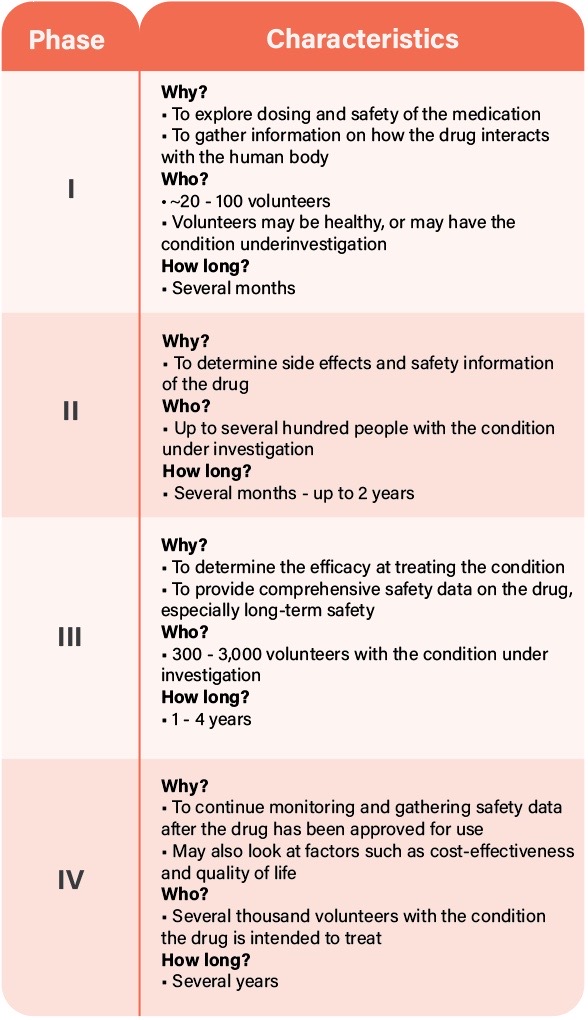
Recall your guess earlier about how much it costs to develop a new drug – want to revise it, now that we’ve covered some basic steps in the process? Keep in mind there’s more – much more – to it than the steps above.
OK – drum roll please –
“After accounting for the costs of failed trials, the median capitalized research and development investment to bring a new drug to market was estimated at $985.3 million, and the mean investment was estimated at $1335.9 million. ”
Yes…over a BILLION dollars!
Now, let’s do a quick breakdown of the results from the Phase I/II study for Ketarx:
Phase I/ II Results
-
The study enrolled patients with moderate to severe Parkinson’s disease.
-
How many patients? Ten. Yep, ten. 10.
-
100% of subjects showed some reduction in dyskinesia (abnormal movements)
-
There were no reported adverse events post infusion. Ketamine infusion rates ranged from 0.20 to 0.30 mg/kg/hour, based on side effects of high blood pressure and dissociation. For example, a person weighing 70 kilograms could receive an infusion dose of 14 to 21 mg/hour.
What Should We Look For With the Phase III Study?

For starters, we’ll see how well the drug works (or, ya know, doesn’t) for treating dyskinesias, and what side effects are noted, in a study larger than ten people.
Why is this important?
After approval, prescription drugs are used by thousands, hundreds of thousands, even millions of people. Maybe even tens or hundreds of millions (You can keep counting, I’ll stop.) It’s impossible to discover the range of possible side effects by studying a drug in only ten people.
We’ll also gain a better understanding of the drug’s long-term effects – again, both how well it does or doesn’t work over a long time, as well as long-term side effects. With respect to long-term side effects, we want to discover a few key things:
-
If the drug causes mild side effects (like a stuffy nose or mild diarrhea), do they go away if you stick with taking the drug for a few more days? Or, are side effects likely to persist in people who have them (likely meaning the stop taking the drug)?
-
Are there certain side effects that only appear after long-term use?
-
Are there certain risks that increase with long-term use? For example, some drugs increase your risk for osteoporosis (weak bones), and this risk increases the longer you use the drug. In this case, it limits the time people can take the drug – which ultimately limits the usefulness of the drug.
Conclusion
The Phase I/II results, plus the recent meeting between PharmaTher and the FDA, lay out how the company can proceed with Phase III trials, possibly leading to approval of a ketamine product for treating levodopa-induced dyskinesia. Phase III trials are the most pivotal for FDA approval, and where many promising drugs go to die. They take several years to complete, so unfortunately, we may not have another update here for a bit. But it’s exciting nonetheless to see an often misunderstood drug show promise for a severely debilitating condition. Here’s to hoping for another positive update with the next study!