
May 30, 2024 by Mattha Busby
TL;DR
- Back in the 1950’s the US military began testing LSD on soldiers, and others, to assess whether it could be used as a mind control weapon. Some 70 years later, psychedelics are being used to heal PTSD among veterans.
- In the not-so-distant future, it is quite possible that soldiers will be routinely undergoing psychedelic-therapy to address war traumas that lead significant numbers of soldiers to leave the armed forces every year
- Drugs like amphetamines and alcohol may previously have helped turn soldiers into monsters. Might psychedelics make pacifists of the warriors; or, simply deepen their trauma?
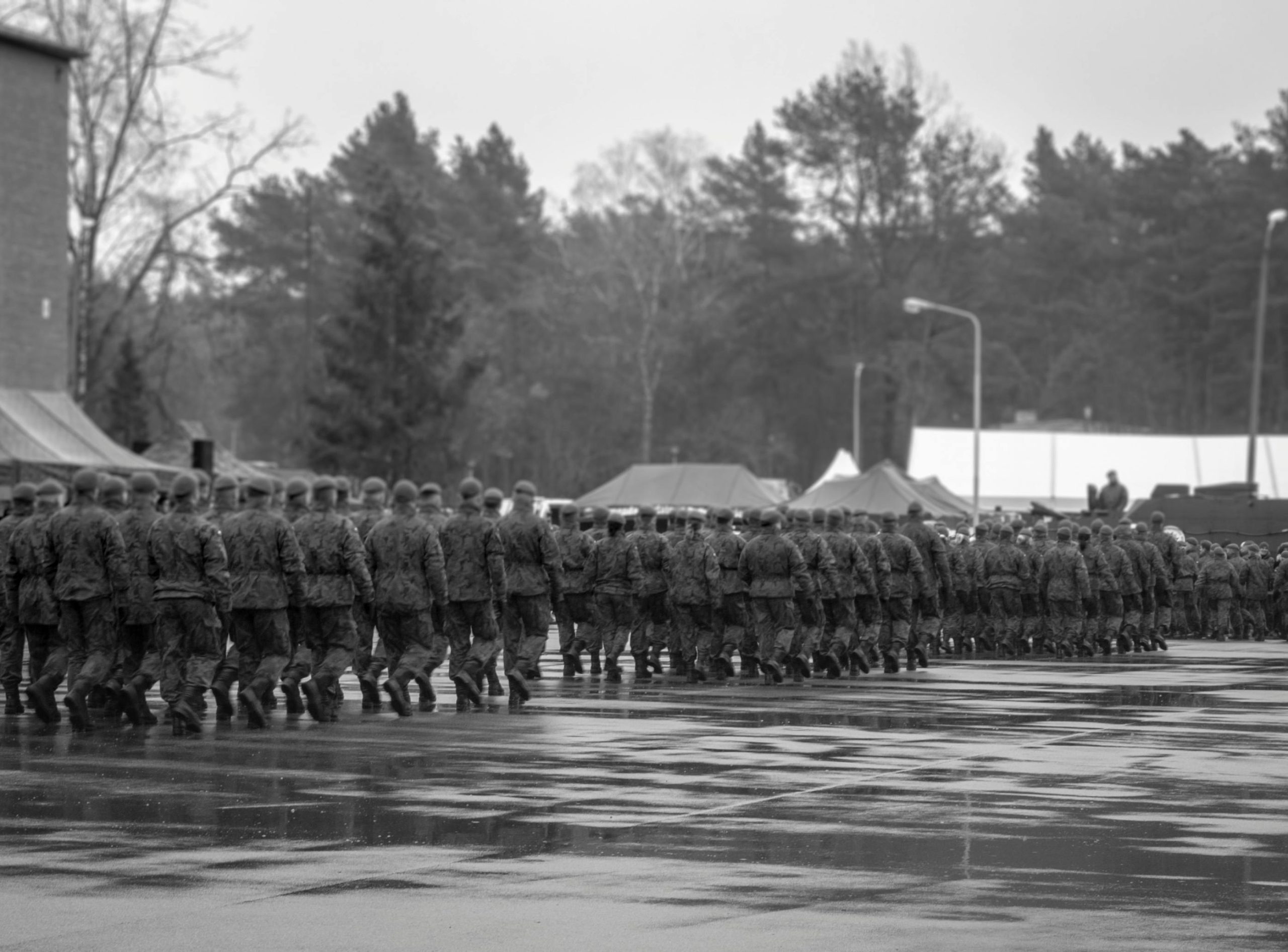
In 1958, the US department of defense was studying the effects of LSD on troops marching. “The drugged squad, although starting fairly well, gave a sluggish and ragged performance,” the narrator of an archive video of a group of soldiers tripping in an exercise yard in Maryland. “After a few minutes, the men found it difficult to obey orders and soon the results were chaotic.”
The overarching aim of such tests, run by the CIA under the notorious MKUltra program, was to assess whether drugs like LSD – the psychedelic which emerged in psychiatry in the 1950s – can control the mind. Most soldiers were surreptitiously dosed, with a drug they knew little of. One lieutenant colonel later died by suicide, while two soldiers suffered from seizures long into their later lives.
The program was halted in 1973 but the uproar over the ethically-dubious tests (conducted with a plan in mind to spray enemy soldiers with LSD to render them useless, or cause them to lose their minds) has continued to this day. Fast forward half a century, and rather than being a class of mind control weapons, military and intelligence chiefs have realized that psychedelics can help address trauma where conventional treatment options fail, and – ironically – open the mind. Now they are taking psychedelics seriously. (Word on the street is that 3-MMC might work better as a truth serum).
It is under the specter of the bizarre previous tests that psychedelic therapy could be offered to active duty US soldiers. At the end of last year, Congress voted to investigate the therapeutic effects of psychedelics on soldiers with PTSD and traumatic brain injury. In Ukraine, soldiers are already attesting to the benefits of ketamine therapy, after undergoing treatments privately, and some have likely already returned to frontlines after being in healing k-holes. Amid serious troop shortages, the country’s authorities are moving towards assessing the benefits of MDMA-assisted therapy for PTSD in a study.
In the not-so-distant future, it is quite possible that soldiers will be routinely undergoing psychedelic-therapy to address war traumas that lead significant numbers of soldiers to leave the armed forces every year. On one level, this is welcome – a long overdue investment in the mental health of soldiers. But it also raises questions:
- How long after their treatments should soldiers return to battlefields?
- Do certain psychedelics create an openness that leaves people more prone to trauma?
- Will there be a mass rollout of such treatments before the data of sustained benefit is clear?
- Could psychedelics be used to increase battle preparedness and reduce the fear of death (as is already the case in some Ukrainian units)?
This final point is driving concern among members of the ibogaine treatment community. In a recent open letter, almost a dozen figures urged the country’s military to reconsider the “reckless” idea – warning it could be “potentially very dangerous to the mental well-being of the soldiers” even if it is effectively being used as an amphetamine replacement. “Witnessing people being killed, killing other people, or sustaining severe injuries while under the influence of this psychedelic could be much more psychologically damaging than otherwise,” they warn.
However, there is certainly no hard data proving that relatively small doses of ibogaine are more harmful than amphetamines in a war context. Though I certainly agree that “ibogaine ‘opens’ people’s consciousness” and there are significant unknowns here. Not least risks from soldiers taking too much ibogaine and tripping on the battlefield. But microdoses of psychedelics like ibogaine may not have the catastrophic effects that the letter’s authors suggest.
Soldiers have long been mandated to consume drugs like booze and amphetamines to get them up for the fight. Longer ago, Greek warriors ate opium before war. In Latin America, indigenous fighters ate coca leaves. In the Middle East, some ate hashish before killing missions. In Shooting Up: A History of Drugs in Warfare, Lukasz Kamiensky writes that “warriors have always dreamt of gaining superhuman abilities that would bring them estimable victory, particularly when meeting their enemy in a decisive clash.”
Whether psychedelics can better help maintain a functioning fighting force remains to be seen. Back in Vietnam, the use of amphetamines “was to blame for some incidents of friendly fire and unjustified violence against the civilian population”. It seems that drugs such as these have long helped turn soldiers into monsters. Might psychedelics make pacifists of the warriors; or, simply deepen their trauma?